
Archive for March 23rd, 2026
Gorean coins and how to handle them
Monday, March 23rd, 2026
Presentation at the En’Kara Fair [2026, edited] by Rarius Yuroki (Yuroki Uriza), merchant and owner of the House of Yuroki Bank, Oasis of Lame Kaiila
Greetings Goreans, welcome to the presentation about coins on Gor and how to handle them.
Here is the content again:
1. What do we know about coins on Gor?
2. Hud coins versus prim coins
3. Which coins already exist in Secondlife Gor?
4. Role-playing with coins; ideas, suggestions and tips
5. Slaves and coins

Two Gorean coins merchants attempt to determine the exchange rates of coins an the En’Kara Fair
1. What do we know about coins on Gor?
The good news first: There is very little standardization of exchange rates on Gor. At every Sardar Fair, the money traders attempt to propose standardization, but their proposal fails every time. (Har har! Do not even try it now!)
Not enough good news – and I’ll explain why that’s good news in a moment: Specific exchange rates vary from city to city and region to region.
Between twenty and four tarsks make one copper tarsk. Between ten and one hundred copper tarsks make one silver tarsk. However, it seems to be standard practice for ten silver tarsks to equal one gold tarn. A double gold tarn is worth the same as two single gold tarns. Eight pieces of Tarsk make one copper Tarsk, one hundred copper Tarsk make one silver Tarsk, and ten silver Tarsk make one gold Tarsk. In Port Kar and the Vosk Delta, ten pieces of Tarsk are exchanged for one copper Tarsk and 100 copper Tarsk for one silver Tarsk.
Your are already confused, arent’ you?
Do you want more confusion? Here we go:
10 Copper Tarsks = 1 Silver Tarsk
“There are one hundred copper tarsks to one silver tarsk in Kailiauk. The ratio is ten to one in certain other cities and towns.”
Savages of Gor, Page 120
BUT:
40 Copper Tarsks = 1 Silver Tarsk
“The tarsk is a silver coin, worth forty copper tarn disks.”
Assassin of Gor, Page 160
| Coin Denomination | Book | Book Number | Page |
|---|---|---|---|
| Copper Tarsk Bit “shaving” | Swordsmen of Gor | 29 | 298 |
| Copper Tarsk Bit “piece” | Conspirators of Gor | 31 | 403 |
| Copper Tarsk Bit | Beasts of Gor | 12 | 77 |
| Copper Tarsk | Tribesmen of Gor | 10 | 36 |
| Copper Tarn | Outlaw of Gor | 2 | 68 |
| Copper Ten-Piece | Rogue of Gor | 15 | 126 |
| Copper Twenty-Piece | Conspirators of Gor | 31 | 186 |
| Copper Forty-Piece | Assassin of Gor | 5 | 27–28 |
| Copper Eighty-Piece | Assassin of Gor | 5 | 27–28 |
| “Smaller” Silver Tarsk | Prize of Gor | 27 | 488 |
| “Larger” Silver Tarsk | Kajira of Gor | 19 | 407 |
| Silver Tarn | Tarnsman of Gor | 1 | 165 |
| Silver Forty-Piece | Assassin of Gor | 5 | 157 |
| Silver Eighty-Piece | Assassin of Gor | 5 | 107 |
| Silver Stater | Swordsmen of Gor | 29 | 132 |
| Gold Tarsk | Smugglers of Gor | 32 | 522 |
| Gold Tarn | Tribesmen of Gor | 10 | 158 |
| Gold Stater | Kajira of Gor | 19 | 394 |
| Gold Tarn of Double Weight | Assassin of Gor | 5 | 4 |
Result: Norman’s books do not provide clear norms regarding the value of coins, only general trends. I recommend to make it simple:
8 Tarsk Bits = 1 Copper Tarsk
100 Copper Tarsk = 1 Silver Tarsk
10 Silver Tarsk = 1 Gold Tarn
2 Gold Tarn = Double Gold Tarn
Why is this confusion good news?
Quite simply: because bankers and coin merchants now have something to do. They have to determine the value of coins being exchanged by strangers. They have to identify counterfeit coins. They might even have to mint coins themselves. You can’t do that yourself; you need a professional because you lack the knowledge: “I was not always as knowledgeable as I might be about the relative values of various coins, of numerous cities, which, of course, depended on such things as compositions and weights, and exchange rates, which might fluctuate considerably.” (Magicians of Gor, Page 411)
Here we are! The coin merchants are a sub-caste of the merchant caste. We know everything about coins! And not only that: we know how to draw up a loan agreement on Gor, how to spot counterfeit coins, we know ….shhhhhhhh….. who to bribe to gain influence.

A Gorean coin merchant steps hard on a warrior’s toes because the warrior wanted to pay with invisible coins
2. Hud coins versus prim coins
Now the bad news: Nobody plays it that way, nobody wants to be a coin merchant. (Except for me, of course.) Why?
We need to briefly digress into the past of the Gorean roleplay, for example:
Gorm Runo: “I first became aware of online Gor in 1998.”
Gorm Runo: “It was in a chatroom in Yahoo Chat called the Three Moons Tavern of Gor.”
Roleplaying in forums means: you can’t rez or see anything and have to emote everything. So anyone could be a millionaire on Gor, they just had to use emotes. That was also the case at the beginning of Second Life: there were coins you could rez, but they were copyable, like the Yen coins that still exist today on on the Secondlife marketplace.

If someone wants to be a millionaire instantly:: Here you can see the copyable Yen coins. The surface and the (illegible) lettering are the same on all coins, only the color of the coins varies. They are available here: https://marketplace.secondlife.com/p/YEN-Coins-Ingots-2/2602286
(If something like that is offered to me in character, my bank will only pay “the value of the metal”.)
That only changed when the Gorean meter introduced hud coins, which could be used, for example, to buy one’s freedom from capture. This was simple and convenient, but of course unrealistic because it’s OOC and the coins are not visible.
This hasn’t changed with the zCS HUD coins. They are simply a unit of account used to determine the OOC exchange value of virtual products.

[13:02] Marcus Attilius (badass.sciarri): What are you doing in my bed?
[13:02] Torm (niceshortbeard.jinxing): I am having sex with your slave…
[13:02] Marcus Attilius (badass.sciarri): But you are alone?!
[13:02] Torm (niceshortbeard.jinxing): I emoted her! (Emoters of Gor, pg. 87)
Here is the most important quote:
To be sure, there is little standardization in these matters, for much depends on the actual weights of the coins and the quantities of precious metals, certified by the municipal stamps, contained in the coins. Sometimes, too, coins are split or shaved. Further, the debasing of coinage is not unknown. Scales, and rumors, it seems, are often used by coin merchants. One of the central coins on Gor is the golden tarn disk of Ar, against which many cities standardize their own gold piece. (pg. 155, Rogue of Gor.)
Can you see municipal stamps on hud coins? No
Can you see the origin of a coin in hud coins, for example, something from Ar? No.
Could one compare the coins from Ar with the coins from Olni using hud coins? No.
But you can do all that with prim coins: you can rez them and read what’s written on the surface.
Of course, you could just emote all of that, but that inevitably leads to drama because I’d accuse anyone whose coin I couldn’t see of counterfeiting. And on my sim, that person would be arrested. Just for fun.

Notecard “Foreign Currency Exchange Rates (HoY bank)”, updated monthly, also includes screenshots of all existing prim coins (click to enlarge)
3. Which coins already exist in Secondlife Gor?
Since 2011, I’ve made non-copyable coins for around 30 sims. Over 80 (!) sims have made their own non-copyable coins so far, for example, Olni or Belnend. Why does hardly anyone use them? Most of them no longer exist, but where all the coins? Admittedly, I traded all the coins I could get for mine in roleplay, but there must still be countless coins lying around in some inventory.

Copper Tarsk bit of Port Cos, City of Ar 1 copper tarks bit (HoY bank), Argentum copper tarks bit, made by Brock Alcove (peko.alcove) (including a script: “Argentum 1 Copper tarsk Bit 6: This is Official Argentum Coin”)
The smallest unit is a copper tarks bit (aboce): “A copper coin worth from 1/4 to 1/20 of a copper tarks, depending on the original value of the coins and how that coin has seen segmented. The usaul numer of Tarsk-hits in a coppaer tarks tends to be eight.- In Port Kar and the Vosl basin region, there are ten tarksbits to a copper tarks.”.
So? Do you have copper Tarks bits in your hud? No, you don’t.

Hochburg 1 copper tarks made by Drusus Tacitus (rowan00), Hazelwood 1 copper tarsk made by beth (jood.mckee) (very rare!), Port Kar 1 copper, Venna 1 copper, Tarnwald 1 copper tarks /HoY mint)
A copper coin that is the whole coin of least value, equalling upt to twenty tarsk bits, though more typically, eight. The copper tarsks of Ar, for instance, are designed to be separated into eight sections.
A copper tarsk: “In many paga taverns, one may have paga and food, and a girl for the alcove, if one wants for a single copper tarsk”.
Since 2007, we have received many suggestions on how to convert the value, for example to the dollar; these range from 70 cents for one copper tarsk to 15 dollars for one copper tarsk.

1 silver tarn from Cartius, Holmesk, Tharna, City of Ar, Anango (HoY Mint) Port sun made by Pippi Moonites (Pippi.moonites), Hochburg made by Drusus Tacitus (rowan00), Torvaldsland (without mention of location) made by Ivar Longbeard (ivar.eberhardt)
A silver tarsk: “ten silver tarsks, such a sum would last a man months on Gor”.
How much are the silver coins worth? The highest amount proposed is 1500 US dollars. I consider that unrealistic.
“My financial resources, the ten silver tarsks, such a sum would last a man months on Gor” (Rogue of Gor, p.59). The average American worker earns $5,000 per month, which would be 10 silver tarsks. One silver tarks is therefore worth US approximately 500 US$. That would mean that 1 copper task is worth approximately 5 US dollars. For a copper task, one could therefore buy a hamburger.

1 gold tarn from Torvickburg, made by 丂in ßLøøÐαXe (sinder.ariantho), 1 gold tarn from City of Ar, Kasra, Jasmine, Oasis of Sand Sleen, Turmus, 1 doble gold tarn from Besnit and Piedmont (HoY mint)
Gold tarn and a doble gold tarn: “A gold tarn disk is more than many common laborers earn in a year” (approximately 50.000 $) With a gold tarn coin, you can buy a war tarn; the coin is therefore worth about as much as a car in real life.

“But how could one spend the coins, and on what?”
2. Role-playing with coins; ideas, suggestions and tips
– The biggest problem is not getting coins, but spending them.
I only recommend using prim coins for specific actions; for example, escorting free women traveling by mercenaries, buying and selling slaves, paying assassins (not everyone can afford that! And hud coins are therefore totally ridiculous).
I recently experienced this myself: a group from the black caste, whom I had hired as mercenaries, wanted hud coins as payment. What’s the next thing you want to hear? A killer demands Lindendollars? Absolute nonsense.
It’s less advisable to use prim coins in taverns or cafes, as this becomes cumbersome and confusing, and visitors are not allowed to rez coins on melee-only sims. Even wages paid to caste members didn’t work – it’s too complicated and quickly becomes boring. Taxes shouldn’t be enforced either, because that overwhelms people. Believe me, I’ve been making coins since 2011, and it’s never worked – people just left the sim.
What does work very well, however, is this: trading companies and independent slave houses should pay taxes to the council or the Admin/Ubar and also provide a written report of their transactions (roleplaying possibilities for scribes, magistrates, merchants, etc.). I would insist that payment be made with prim coins, so that one can be sure of not being given “counterfeit” money.

Two Gorean Free Women accuse each other of having paid with counterfeit money.
The sim owner must support you, but prim coins should never be mandatory, only an option to make roleplaying more realistic. If a sim owner tries to force you into out-of-character (OOC) activities by only allowing hud coins, I would recommend to leave this sim. There are about 150, and they’re all looking for players. A sim owner who hinders roleplaying for merchants instead of promoting it doesn’t deserve support.
– Coin exchange: Regardless of which coins you are offered (copyable or non-copyable), to exchange them for valid and certified coins: you need a scale and a silver and gold coin from Ar (you can get these from me; they show the coat of arms of the city of Ar, which consisted of four Sims). Certified means: you can see on the surface where it comes from. If someone offers me copyable coins, or if I can’t recognize their origin in roleplay, I’ll pay the value of the “metal” (endless roleplay possibilities).

A warrior could not pay his debts to the bank and was put in chains.
– Loans: In the small board you will find a notecard for a draft of a Tabularum obsignatione. Tabularum obsignatione was an IOU (acknowledgement of debt) in ancient Rome. Nexum was a debt bondage contract in the early Roman Republic. Don’t forget the witnesses:
“These papers are certified by the bank of Bemus in Venna, and are witnessed by the signatures of two citizens of that city.”
(Fighting Slave of Gor)
If someone borrows coins and doesn’t pay them back within a certain timeframe: call your slaver! He’ll have something to do!

Coin Girl of Gor
5.Slaves and coins
Generally, slaves were not allowed to touch coin. They could be punished severely, even to the point of having their hands cut off, for having unauthorized money on their person or in their belongings. This, in other words, was touching money without authorization.
However, slaves were often given money to run errands, go shopping, to give to their owners, etc. This money could be carried in a bag tied around their necks, in their mouths or carried in their hands. (Even the free carried coins in the mouth because most Gorean clothes have no pockets). The difference between this and the previous statement is that they were authorized to have the money.
Slaves could touch coins in Gor, as long as they had the permission of their owners to do so. (fore quotes read the notecard: “slaves and coins” in the small board)
“Coin girls” were sent out by their Masters with coin boxes and bells to earn him money for her use.
Coin girls were a form of street slave, usually sent into the streets around dusk by their masters, who commonly own several of them, with a chain on their neck, to which would be attached, normally, a bell, to call attention to their whereabouts, and a small, locked coin box. And woe to the girl who returns with coins jangling in the box! To be sure, in some places, one might even have a paga slave, or a brothel slave, for as little as a tarsk bit.
(Renegades of Gor)
“The girl did not now, of course, carry a purse. Slave girls are not permitted to carry such things. When shopping she carries the coins usually in her mouth or hand. Sometimes she ties them in a scarf about a wrist or ankle. Sometimes her master places them in a bag, which is then tied about her neck. Gorean garments, generally, incidentally, except for the garments of craftsmen, do not have pockets. Coins, and personal items, and such, are usually, by free persons, carried in pouches, which are usually concealed within the robes of a free woman, or slung about the waist, or shoulder, of a free man.” (Guardsman of Gor),
We’ve reached the end of my presentation. If you need any help, or if you’d like me (= the House of Yuroki Mint) to make you some coins, just let me know.
Thank you so much for your patience and for listening.
Poisons of Gor
Monday, March 23rd, 2026
Astorette Novi
Poisons part I in for the kill
Presentation at the En’Kara Fair [2026, edited] by Astorette Novi, Physician, teacher and mentor, Ravenshold
[05:01] Astorette Novi: this talk is given with quotes to back up statements made and are the thoughts and opinions of the speaker and not a representation of the caste of Physicians of Gor
The Ost
[05:02] Astorette Novi: The ost is the most deadly creature in gor. it is small and the only thing that warns you of the danger is its bright orangey yellow colour with black bands. It is about a foot long. Usually found in the tahari. Or if from the uschendi red with black bands.
[05:02] Astorette Novi: “The banded ost is a variety of ost, a small, customarily brilliant orange reptile. It is exceedingly poisonous. The banded ost is a yellowish orange and is marked with black rings.” (Assassin of Gor pg. 335)
[05:02] Astorette Novi: “The ost is usually an orange snake, but these were Ushindi osts, which are red with black stripes. Anatomically, and with respect to toxin, I am told they are almost identical to the common ost.” (Explorers of Gor pg. 239)
[05:03] Astorette Novi: Death happens in seconds and there is no cure mostly because there is no time to even give an antidote to the victim. It is the worst most painful death possible, no way to rp as there is no time death comes fast and painfully.
[05:03] Astorette Novi: “One to be feared even more perhaps was the tiny ost, a venomous, brilliantly orange reptile little more than a foot in length, whose bite spelled an excruciating death within seconds.” (Outlaw of Gor pg. 26)
[05:04] Astorette Novi: There is no doubting what killed the victim the orange colour of his face in death is unique.
[05:04] Astorette Novi: “I was scarcely aware of the brief whimpering of the Paravaci as, twisting and turning on the rug, biting at it, holding his arm, his flesh turning orange from ost venom, he writhed and died.” …I saw the contorted, now – orange, twisted, agonized face. Already, it looked like colored paper and peeling, as though lit and burned from inside. There were drops of blood and sweat on it.” (Nomads of Gor pg. 318)
[05:05] Astorette Novi: Because there is no shortage of information on this snake we now the effects of a bite from it and how painful for the few seconds it takes to die it is.
[05:06] Astorette Novi: “Then suddenly, from in front of me, in the darkness, I heard a hideous cry of pain. Then I heard a wild, piteous shriek which terminated in spasmodic coughing and gasping. I heard fingernails scratching at a wooden surface and the turning and thrashing of a body.” …”I looked to the round, shallow, circular pit in the center of the room. It was about a foot deep. The poles supporting the sleeping platform were set within it. In the pit, his hands still clutching, fingernails bloody, at one of the round poles supporting the platform, lay an askari. His body was twisted horribly, and contorted. The flesh had turned a blackish orange and, in places, had broken open, the skin peeling back like burned paper. A knife, fallen, lay near him in the pit. About his body, small, nervous, sinuous, crawled tiny snakes. osts.” (Explorers of Gor pg. 238-239)
[05:08] Astorette Novi: This is a rarely seen narrow, dark snake abut five feet long with a small triangular head its poison is thought to be deadly but by no means as deadly as the ost. It is usually found in the delta. The marsh moccasin has no known cure and any symptoms have not been recorded. Despite this it is believed that FW may have been thrown to them as a form of execution. The only information we have comes in two quotes the first of which i have separated into two..
[05:08] Astorette Novi: We saw a narrow, dark shape, about five feet long, like a slowly undulating whip, glide past. A small triangular head was almost level with the water surface. I did not think there had been much danger, but there was some possibility that the movement of her legs in the water might have attracted its attention.
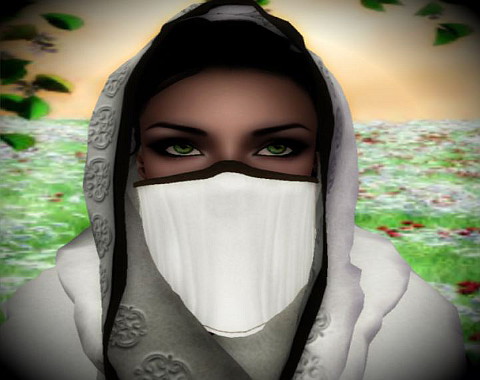
Lady Rose Khaos [Rose Harlow], head physician to the Port City of Olni, see also: “How Gorean Physicians treat a shock and hallucinations, From the NEW VOICE OF GOR v.4 Issue 156. (2014)
“That is a marsh moccasin,” I said.
“Are they poisonous,” she asked.
“Yes,” I said.
“I never saw one before,” she said.
“They are not common,” I said, “even in the delta.”
[05:09] Astorette Novi: “Are they poisonous, the marsh moccasins, like the ost?” she said.
“They are quite poisonous,” I said, “but their venom, as I understand it, does not compare to that of the ost.”
“Could I survive its bite?” she asked.
“Possibly,” I said. “I do not know.”
Vagabonds of Gor, Book 24, Pages 267 – 268
[05:10] Astorette Novi: “It seems that slaves have various advantages over free women,” she said.
“What did you have in mind?” I asked.
“Not being thrown to marsh moccasins, osts, and such.”
“Presumably not,” I said, “at least if they are pleasing.”
Vagabonds of Gor, Book 24, Page 271
Kanda
[05:11] Astorette Novi: As can be seen from the following quote this plant grows mostly in the tahari region.
[05:11] Astorette Novi: The roots of the kanda plant, which grows largely in desert regions on Gor, are extremely toxic, but, surprisingly, the rolled leaves of this plant, which are relatively innocuous, are formed in ostrings and, chewed or sucked, are much favored by many Goreans, particularly in the southern hemisphere, where the leaf is more abundant. Nomads of Gor, page 43
[05:12] Astorette Novi: it is well documented and is known to be used to coat hairpins or daggers that free women carry for protection. as yet it has not stated what reaction the poison takes though it is believed to possibly be a cousin of earths coca plant
[05:13] Astorette Novi: The leaves which we will not concern ourselves with too much today bring a state of euphoria/numbness that is similar to that of strong analgesics. Personally as a physician i hate kanda and spend a lot of my time searching out crops to be destroyed it makes good rp. From what i have seen of the addiction it is a little like cannabis.
[05:14] Astorette Novi: Kanda is a lethal poison It can be used on a large scale from poisoning a water supply, to, in a white paste form, coated on weapons or even needles.One piece of jewelry mentioned is a ring which, when a tiny switch is pressed, a hollow steel fang springs up containing this deadly toxin
[05:14] Astorette Novi: “a squad of spearmen had reached the main siege reservoir, emptying their barrels of toxic kanda, a lethal poison extracted from one of Gor’s desert shrubs.”
Tarnsman of Gor, Page 179
[05:15] Astorette Novi: “I found a needle; I smelled it; it was smeared with kanda, a deadly toxin”
Tribesmen of Gor, Page 132
[05:16] Astorette Novi: “On the first finger of his left hand he wore a fang ring, which, I had little doubt, would contain a poison, probably that of the deadly kanda plant.”
Explorers of Gor, Page 151
[05:16] Astorette Novi: I have been unable to find a quote that details the symptoms of kanda poisoning
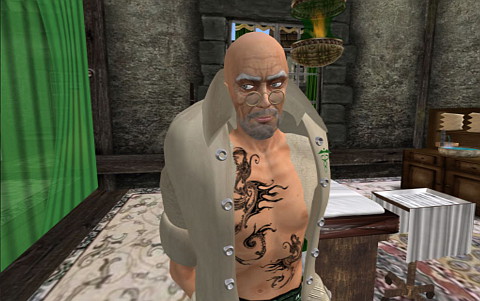
Zinkan Dewoitine, retired head physician of Melicerus, see also “Why a new subspecies of the Cosian Wingfish can cause halluzinations, from the NEW VOICE OF GOR v.4 Issue 156 (2014)
Cosian wingfish
[05:26] Astorette Novi: Also known as ‘song fish’ due to its whistling mating song; a tiny blue saltwater fish with 4 poisonous spines on its dorsal fin. Found in the waters off Port Kar; its liver is considered a delicacy in Turia.
[05:27] Astorette Novi: “The blue, four-spined wingfish is found only in the waters of Cos. Larger varieties are found farther out to sea. The small blue fish is regarded as a great delicacy, and its liver as the delicacies of delicacies.” (Nomads of Gor, page 23)
[05:27] Astorette Novi: The wingfish or songfish can hurl itself out of the water and glide through the air for a short distance on its pectoral fins usually to escape predators. it must make a spectacular sight,
[05:28] Astorette Novi: sounds similer to the pufferfish that Japanese chefs have to be specially trained to prepare and as much a delicacy as cavier on earth.
[05:29] Astorette Novi: “Now this,” Saphrar the merchant was telling me, “is the braised liver of the blue, four-spined Cosian wingfish.” This fish is a tiny, delicate fish, blue, about the size of a tarn disk when curled in one’s hand; it has three or four slender spines in its dorsal fin, which are poisonous; it is capable of hurling itself from the water and for brief distances, on it stiff pectoral fins, gliding through the air, usually to evade smaller sea-tharlarians, which seem to be immune to the poison of the spines. This fish is also at times referred to as the songfish because as a portion of it’s courtship rituals, the males and females thrust their heads from the water and utter a short whistling sound. The blue, four spined wingfish is found only in the waters of Cos. Larger varieties are found further out to sea. The samll blue is regarded a great delicacy, and it’s liver a delicacy of delicacies.” (Nomads of Gor, pg. 84-85)
[05:30] Astorette Novi: Symtoms while not specified are likely to be numbness around the mouth and lips, increased drooling, nausea and vomiting including stomach pain. As time passes these become more severe. Muscle weakness may occur possibly paralysis, difficulty in breathing leading to possible respiratory failure, and in the most severe cases loss of consciousness. These can occur within ten minutes of the poison entering the system.
[05:32] Astorette Novi: Treatment consists of limiting the body’s absorption of the toxin, relieving symptoms, and treating life-threatening complications. There is no known antidote.
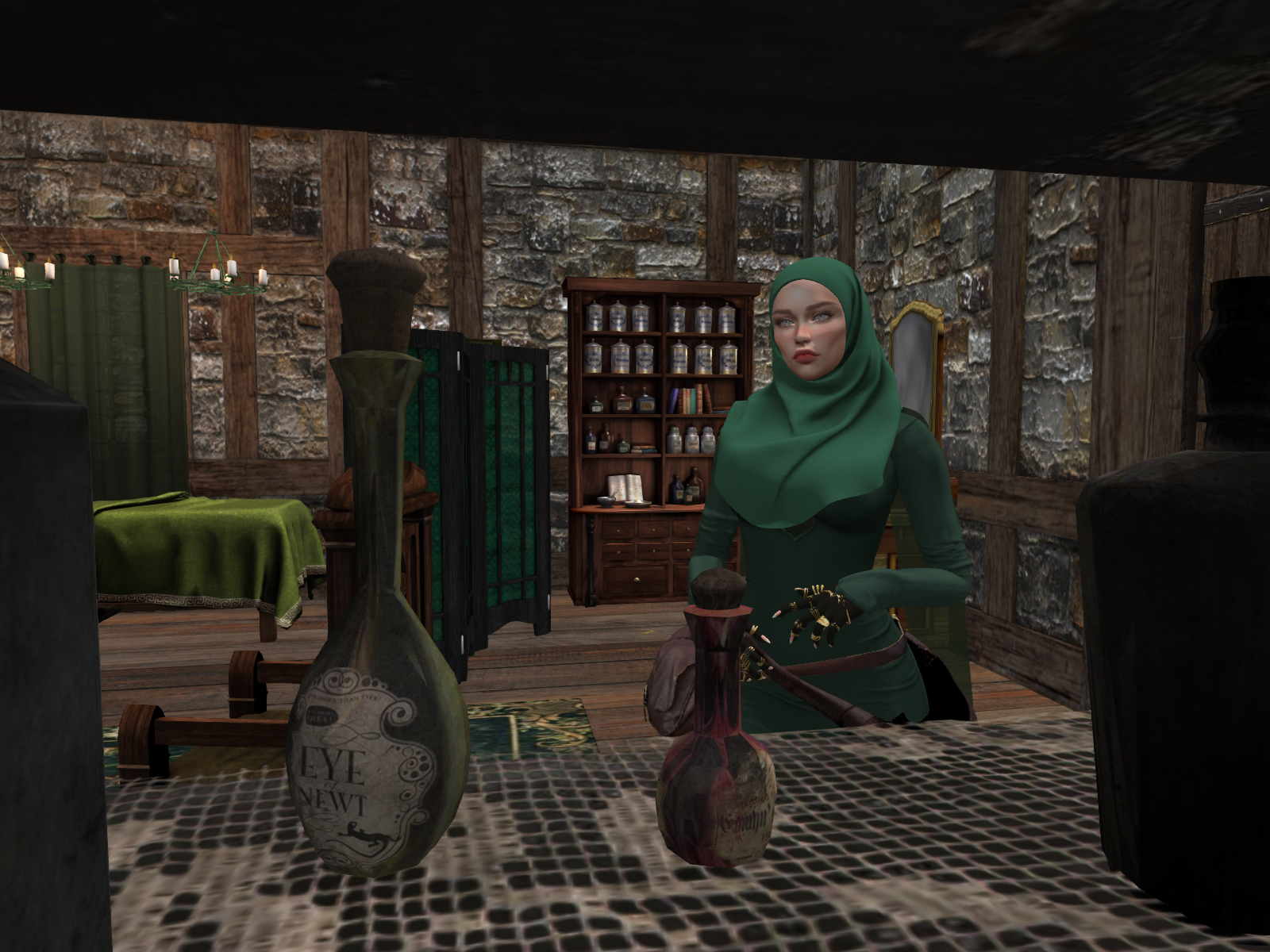
Jᴜʟɪᴊᴀ Yᴇɢᴏʀᴏᴠᴀ (viixic), Physician of Kargash, working in the infirmary. (2022)
PART II
Stings and things
[04:58] Astorette Novi: this talk is given with quotes to back up statements made and are the thoughts and opinions of the speaker and not a representation of PCoG
[04:58] Astorette Novi: If you have any questions during the course of this talk please enter @ into main chat and i will get to you as soon as possible
Stingflies
[04:59] Astorette Novi: These were solitary creatures with the exception of their summer season when they come to lay their eggs and the eggs hatch. that had been previously laid.
[05:00] Astorette Novi: “The Sting Fly found in the Vosk Delta also is shown to cause considerable medical complications ranging from blindness to death.” (Vagabonds, pg. 162-169).
[05:00] Astorette Novi: “Once outside the delta the sting flies, which spend most of their adult lives as solitary insects, tend to disperse. Of the millions of sting flies hatched in the delta each summer, usually over a period of four or five days, a few return each fall to begin the cycle again.” …
Vagabonds of Gor pg. 161-176
[05:00] Astorette Novi: “Once outside the delta the sting flies, which spend most of their adult lives as solitary insects, tend to disperse. Of the millions of sting flies hatched in the delta each summer, usually over a period of four or five days, a few return each fall to begin the cycle again.” …
Vagabonds of Gor pg. 161-176
[05:01] Astorette Novi: “There could now be no mistaking the steadily increasing volume of sound approaching from the west. It seemed to fill the delta. It is produced by the movement of wings, the intense, almost unimaginably rapid beating of millions upon millions of small wings.
Vagabonds of Gor pg. 161-176
[05:08] Astorette Novi: They are attracted to the whites of peoples eyes the sting from one raising a large painful lump that can disfigure someone if numerousstings they can kill. One sting is painful beyond belief and is believed to make grown men cry.
[05:09] Astorette Novi: “Needle flies are about! cried a man. Beware! The clouds approach more closely! cried a man. But what are the clouds? cried a fellow. They are needle flies! cried a man. I heard shrieks of pain.” …”My eyes! screamed a man. My eyes! The flies tend to be attracted to the eyes, as to moist, bright objects.” …”The sting of the sting fly is painful, extremely so.”
Vagabonds of Gor pg. 161-176

A physician treats a wounded person, Oasis of Klima (2024)
[05:09] Astorette Novi: There is a set way the venom of the stingfly works first there are the instant swellings in the sting area very painful swellings after being stung by several the accumulative effect of the poison causes nausea. Many more than that is death.
[05:10] Astorette Novi: “depending on the individual, can induce nausea. Men have died from the stings of the flies but usually in such cases they have been inflicted in great numbers. A common reaction to the venom of the fly incidentally is a painful swelling in the area of the sting. A few such stings about the face can render a person unrecognizable. the swelling subsides, usually, in a few ahn.”
Vagabonds of Gor pg. 161-176
[05:12] Astorette Novi: There is just a tiny quote on rennel but it gives a description and an idea of how aggressive they are. when instead of defending the nest it attacked that which destroyed it.
[05:12] Astorette Novi: there is nothing to say how these attack but would think a bite must be pretty bad to turn a caravan of 1000 wagons aside. if they had been a mere annoyance the caravan would have kept going.
[05:13] Astorette Novi: “was told by Kamchak that once an army of a thousand wagons turned aside because a swarm of rennels, poisonous, crablike desert insects, did not defend its broken nest, crushed by the wheel of the lead wagon.”
Nomads of gor
[05:14] Astorette Novi: The next two I have not been able to find more than a few words on.
Rabid bats
[05:15] Astorette Novi: These bats are said to live in caves and can be aggresive they are used by a city to swoop down on the enemy when attacking. This is from memory so if anyone can find the quote i would be grateful. Because there is a cure on earth there will be a cure on gor.
Seaweed, Waters near Schendi
[05:16] Astorette Novi: Many fish in these tropical waters are poisonous to eat, a function of certain forms of seaweed on which they feed. The seaweed is harmless to the fish but it contains substances toxic to humans.

Infirmary of the Oasis of Red Rock – Physicians working (2024)
Sullius Maximus’ Poison Tyros steel
[05:16] Astorette Novi: Sullius Maximus was knowledgable in poisons. One particular use mentioned was paralyzing a man who was an enemy. The unfortunate was paralyzed from the neck down.
[05:17] Astorette Novi: “A contaminant?” I asked. “Poisoned steel,” he said. I said nothing. “Sullius Maximus,” he said, “is in Tyros.” “I would not have thought Saurus of Tyros would have used poisoned steel,” I said. Such a device, like the poisoned arrow, was not only against the codes of the warriors, but, generally, was regarded as unworthy of men. Poison was regarded as a woman’s weapon. Iskander shrugged.”Sullius Maximus, ” he said,” invented such a drug. He tested it, by pin pricks, on the limbs of a captured enemy, paralyzing him from the neck down. He kept him seated at his right side, as a guest in regal robes, for more than a week. When he tired of the sport he had him killed.” “Is there no antidote?” I asked. “No,” said Iskander.
-Marauders of Gor, pg. 18-19
[05:18] Astorette Novi: But after
[05:18] Astorette Novi: “The poison,” said he, “that which lay upon the blades of the men of Sarus of Tyros, lurks yet in your body.” “There is no antidote,” I told him. “This I had from Iskander of Turia, who knew the toxin.” “Warrior,” said the man who stood with Samos, “I bring the antidote.”
-Marauders of Gor, pg. 282
[05:20] Astorette Novi: He removed a vial from his pouch. It contained a purplish fluid.
“Has it been tested?” asked Samos. “On the body of Sullius Maximus,” said Sarus. “On the tenth day, on his arms and legs, and twice, transversely, across his right cheekbone, that his face be scarred and his shame known, I drew the poisoned blade, drawing blood with each stroke.” I smiled. Sullius Maximus was a handsome man, extremely vain, even foppish. He would not appreciate the alteration of his physiognomy, wrought by the blade of Sarus. “Within seconds,” said Sarus, “the spiteful fluid took its effect. The eyes of Sullius were wild with fear. ‘The antidote! The antidote!’ he begged. We sat him in a curule chair, vested as a Ubar, and left him. We wished the poison to work, to be truly fixed within his system. The next day, when the bar of noon was struck on the wharves, we administered to him the antidote. It was effective.
-Marauders of Gor, pg. 284
[05:22] Astorette Novi: there are quite a few poisons because you have for eample fobricain of geiron and sjel which have not ben mentioned
[05:23] Astorette Novi: However I would like to look at ways these were administered before I end
[05:24] Astorette Novi: Free Women are the biggest users of poison and in truth it is felt to be the weapon of women, since most are not trained in other ways to defend herself. A Free Woman may carry a poisoned knife or needle concealed in her clothes. She may also use poisoned pins to style her hair. Such weapons can also be concealed in a room or area known only to the woman
Fang Ring
The name comes from the fact that it is worn like a normal ring, but there is a place to press which causes a “fang” to raise up. The venom or poison is stored inside the ring, the fang is just like a snake’s fang, hollow and when it punctures the skin, the poison is delivered through it
Poison Girls
A person can be slain by the bite of a chemically prepared slave. It is also possible to breed a girl with poisonous saliva.
Poisoned Drinks
Poison, such as kanda or ost is added to a drink.
Poisoned TeethSuicide Pellets
Special pellets formulated to kill. They are taken when a person does not wish to give up information that may be tortured from him.
Water Sources
Poison may be added to a place’s water supply to spoil it and cause death and confusion.
[05:29] Astorette Novi: there are many more you just need to think it through these are just a few.
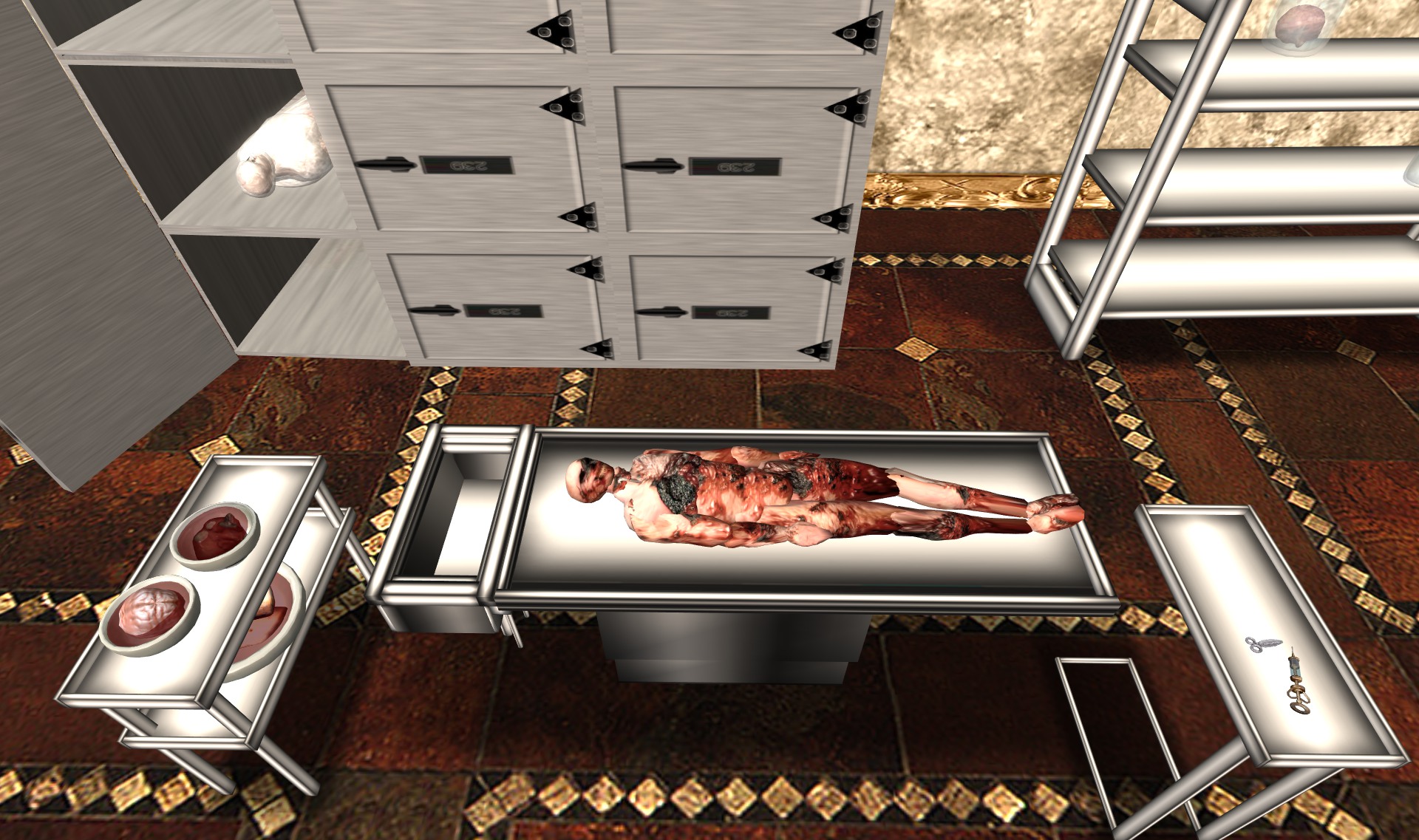
Mortuary of Landa (2011)
The Sardar Pilgrimage as a Legal Measure of Punishment
Monday, March 23rd, 2026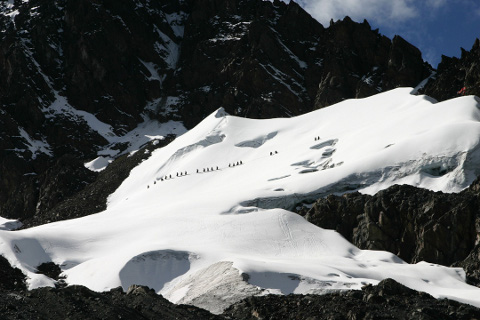
Pilgrimage to Sardar, taken from he Ianda Times vol. 1, issue 33 (2012)
The Sardar Pilgrimage as a Legal Measure of Punishment
Presentation at the En’Kara Fair [2026, edited] by Melampus (godhet), member of the white caste and Initiate of Isfahan
You are most welcome to my talk on “The Sardar Pilgrimage as a Legal Measure of Punishment.” My name is Melampus, and I have been an initiate at the Temple of Isfahan for three years, having previously studied with my revered teacher, Blessed One Tariq ibn Joshao, from the Oasis of Two Scimitars.
[15:02] Melampus (godhet): Today, here as we stand on this pilgrimage, before the majestic Sardar Mountains, I feel compelled to make a proposal. It is a proposal to include the pilgrimage to the Sardar Mountains as a means of punishment within the public legal system.
[15:03] Melampus (godhet): I am not only talking about pilgrimages as a punitive measure under the Initiate Law for religious offenses, but also about secular law, that is, about public law of cities as well as merchant law.

The gates of Sardar
[15:04] Melampus (godhet): For wherever we read about the Initiate Law in the books, we see that it is closely intertwined with secular legal systems. This is particularly evident in the fact that Goreans must undertake this journey before their 25th birthday. The following quote refers to Ute from the leatherworkers’ caste of Teletus:
[15:04] Melampus (godhet): “Besides, she knew well that, some year, prior to her twenty-fifth year, such a journey must be undertaken by her. The Merchants of Teletus, controlling the city, would demand it of her, fearing the effects of the possible displeasure of the Priest-Kings on their trade. If she did not undertake the journey then, she would be simply, prior to her twenty-fifth birthday, removed from the domain of their authority, placed alone outside their jurisdiction, beyond the protection of their soldiers. Such an exile, commonly for a Gorean, is equivalent to enslavement or death. For a girl as beautiful as Ute it would doubtless have meant prompt reduction to shameful bondage, chains and the collar. …”
Captive of Gor, Book 7, page 234
[15:05] Melampus (godhet): Had Ute not undertaken the pilgrimage before her 25th birthday, she would be subject to secular law and would have to face consequences as described in this quote. This means that the secular authorities, if not ensuring the pilgrimage itself, would at least impose legal repercussions if the journey was not undertaken within the prescribed time limit.
[15:06] Melampus (godhet): It is a religious precept. But the reason a city administration enforces it lies in the fear that the city might lose the favor of the priest-kings if it disobeys. The city’s welfare—or, in religious terms, its salvation—is at stake. The priest-kings might turn against the city if religious precepts are not followed.
[15:06] Melampus (godhet): Why is that?
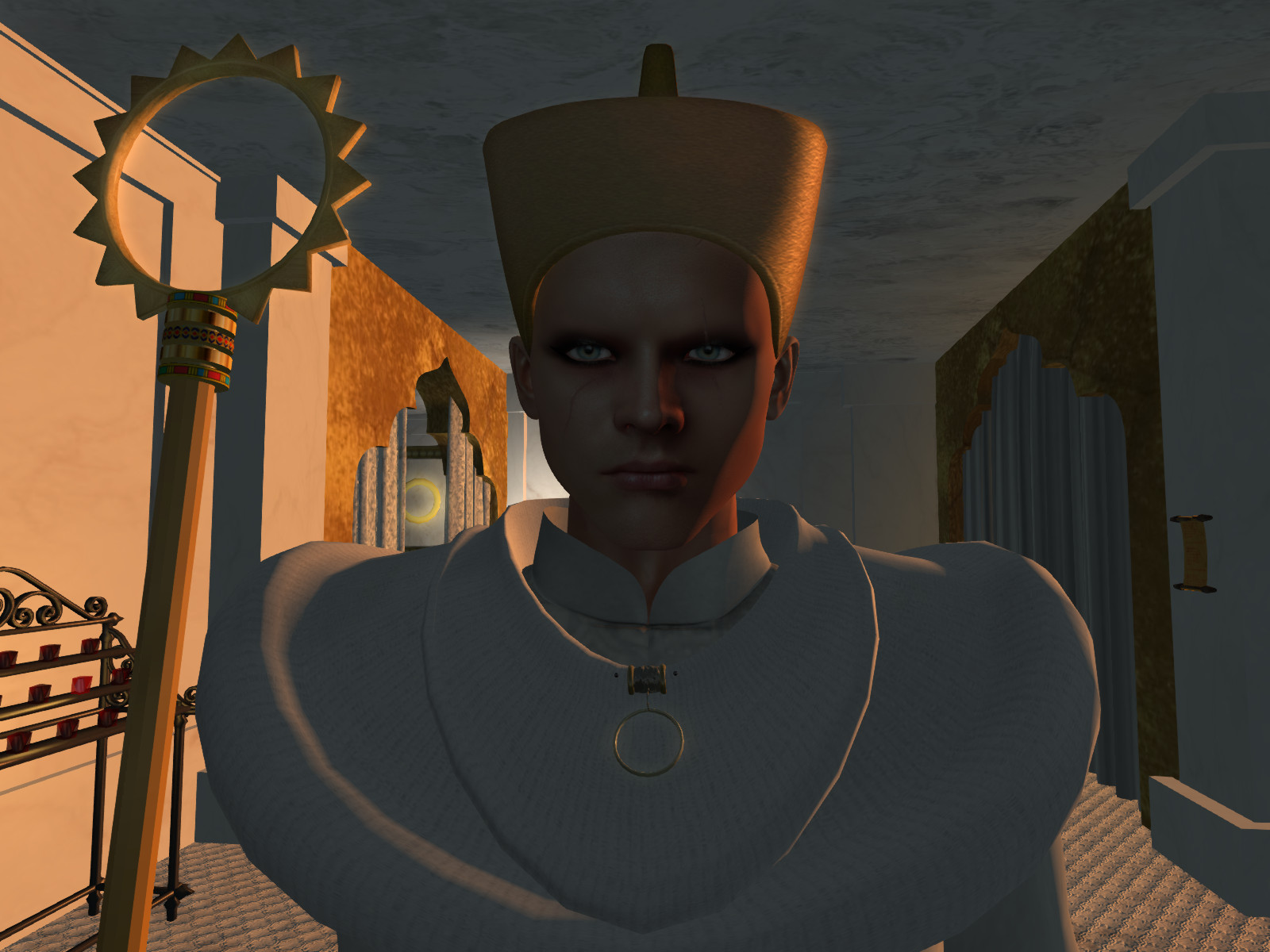
Initiate Kai (malakai.corvinus) inaugurated the temple of the White Caste in Cartassa (2022).
[15:07] Melampus (godhet): The cities in the central region of the Gorean continent and the surrounding islands were famously created by John Norman based on the model of the polis in ancient Greece. It is therefore reasonable to assume that the religion of these cities, the belief in priest-kings, is also based on the religion of the Greek polis
[15:08] Melampus (godhet): And indeed, there are parallels that are already evident in the external circumstances. The priest-kings reside in a mountain range, the Sardar Mountains, and according to ancient Greek belief, the gods also dwell on a mountain massif, Mount Olympus, the highest mountain in Greece.
[15:08] Melampus (godhet): A central concept in ancient Greek religion is “hubris.” And that is what this is about: hubris. “Hubris” means arrogance and presumption. The reasons lie in overestimating oneself and in pride. Both are things that neither the gods of Greece nor the priest-kings can tolerate. Whoever overestimates himself and becomes arrogant lacks proper restraint; he owes both gods and priest-kings the respect they deserve. He becomes presumptuous and disregards the commands of the gods. And he ignores religious precepts.
[15:10] Melampus (godhet): If a community, a city, tolerates or even supports this, it is guilty of hubris. It will be punished by the gods just as arrogance itself is. The priest-kings withdraw their favor from the city, and the city becomes impoverished or desolate. The previously mentioned quote refers to the merchants who are explicitly concerned about trade in their city of Teletus.
[15:11] Melampus (godhet): But things could get even worse. If the inhabitants let their hubris go too far, they might face the destruction of their city by the blue flame. The consequences are devastating: A city that has lost the favor of the priest-kings is doomed.
[15:12] Melampus (godhet): The pilgrimage to the Sardar Mountains is therefore not only a supplication pilgrimage, in which offerings are made to the priest-kings on the platform by the palisades in exchange for a favor. Of course, this is also part of the pilgrimage to the Sardar Mountains.
[15:12] Melampus (godhet): An example of this is the Red Savage, which John Norman describes on that platform in Book 3, Priest Kings of Gor: The hunter gives the priest-kings a self-carved tabuk and in return wants the tabuk herds to not fail to appear that year.

Initiates of Herlit (2011)
[15:13] Melampus (godhet): This is the principle of “Do ut des,” as the Romans say. I give you something so that you give me what I want. This principle can also include the idea of restitution. The priest-kings are receiving back something that is rightfully theirs, but which I withheld from them through my hubris.
[15:14] Melampus (godhet): If I succumbed to hubris, I withheld something from the priest-kings. I thereby angered them. What could be more obvious to appease the priest-kings in their wrath than a pilgrimage to the Sardar Mountains? Here, too, the pilgrimage is, in a sense, a bargain with the priest-kings.
[15:15] Melampus (godhet): If the authorities enforce religious rites to ensure the prosperity of their city, then I believe it is reasonable to consider using religious precepts as a legal remedy beyond this. This could even include a sentence of pilgrimage, even for a criminal offense.
[15:16] Melampus (godhet): I would like to illustrate this with a case study that does not come from John Norman’s books, but from Earth:
[15:16] Melampus (godhet): In the city of Leuven in the Duchy of Brabant (present-day Belgium), in 1418, the citizen Janne Vliege int Sant stood before a jury. He was accused of acts of violence, mistreatment, and rape. The jury sentenced him to three pilgrimages to Cyprus, Santiago de Compostela, and Rocamadour, and precisely stipulated the itinerary for each.
[15:17] Melampus (godhet): Janne Vliege has to leave for Cyprus within three months. That means he has to travel from Leuven, a neighboring city of Brussels, to a Mediterranean port in order to sail from there to Cyprus.
[15:19] Melampus (godhet): Once he returns from Cyprus, he has to set off for Santiago de Compostela within six weeks. Santiago is located in the far northwest of Spain. Janne Vliege therefore has a long and arduous hike ahead of him, crossing the Pyrenees and the mountains of northern Spain.

An Initiate, Se’Kara Fair (2024)
[15:20] Melampus (godhet): Once he returns from Santiago, he must set off for Rocamadour within another six weeks. Rocamadour lies precisely in the center of France. This means that on his pilgrimage to Santiago, he could have planned his route to pass by it. But no, the jury ordered him to return home first before embarking on his third pilgrimage.
[15:21] Melampus (godhet): Janne Vliege had to bring a certificate from each pilgrimage site, in which a priest confirmed to the lay judges that the convicted man had been there and had fulfilled the religious requirements with the necessary devotion. In his case, we don’t know if this happened, because the certificates can no longer be found in the archives.
[15:22] Melampus (godhet) ad Radegundam vertit: “Unum tale dictum adhuc, filia mea, et lingua originali initiatorum loqui pergam.”
[15:23] Melampus (godhet): But sentencing people to punitive pilgrimages was common practice. Thousands of such sentences have survived from the period between the 14th and 17th centuries, and occasionally even into the end of the 18th century. We find them primarily in the cities of the Netherlands, including present-day Belgium, and in southern France, where the Inquisition in Toulouse was also very active.
[15:24] Melampus (godhet): The criminal cases that resulted in sentences of punitive pilgrimages were diverse. They can be assigned to several categories.
[15:25] Melampus (godhet): Religious offenses: These include blasphemy and heresy.
[15:26] Melampus (godhet): Official misconduct: Corruption and misconduct by municipal and princely officials. But also insulting or using violence against officials, for example, slapping a magistrate.
And also official misconduct committed by both groups: perjury, forgery, violation of police regulations, filing false complaints.
[15:27] Melampus (godhet): Commercial offenses: Use of false measures and weights, violation of regulations governing trade and business activities
[15:27] Melampus (godhet): Sexual offenses: Rape, sodomy, laziness, adultery
[15:29] Melampus (godhet): Offenses against persons:
Breach of the peace, manslaughter, threats, provocations, assault, inflicting injuries, attacks on someone’s home, insult
[15:30] Melampus (godhet): Property crimes: Theft, robbery and poaching

A member of the White Caste, En’Kara Fair (2024)
[15:32] Melampus (godhet): However diverse these offenses may be, in Dutch cities, the punishment in one-third of all documented cases across all categories was a pilgrimage to Santiago de Compostela. This is a walk of approximately 5,000 kilometers: 2,500 kilometers there and 2,500 kilometers back. If a person committed multiple offenses, the lay judges often imposed several pilgrimages.
[15:33] Melampus (godhet): In serious cases, the pilgrimages had to be undertaken one after the other. Often, the lay judges were lenient, and the requirement to visit several places could be fulfilled with a single trip.
[15:33] Melampus (godhet): It is important to note that even in late medieval European criminal law, a distinction was made between manslaughter and murder. In cases of manslaughter, a punitive pilgrimage could be imposed, but not in cases of murder. Murder was considered too serious to warrant a pilgrimage.
[15:34] Melampus (godhet): Why were criminals sentenced to pilgrimages?
[15:34] Charlotte Windsor: So we, Goreans, vs. earthlings, are the blessed ones to only need to go to the Sardar for the piligrimage before we are twenty-five. Receiving pardon from such crimes, and appeasing the Priest Kings.

An initiate during a mysterious ritual (Herlit 2011)
[15:35] Charlotte Windsor: So the city will be cleansed of his crimes?
[15:35] Charlotte Windsor: a sacrifice for the Priest Kings.
[15:36] Melampus (godhet): Yes, you afre right, Lady. Both is correct.
[15:36] Melampus (godhet): There are a whole host of reasons, ranging from legal history to psychology. I’d like to mention the four most important ones:
[15:37] Melampus (godhet): Religious reasons. A crime is not only an offense against fellow human beings and society, but also a sin against God. A pilgrimage can offer atonement for an offense committed against God and against the divinely ordained order.
[15:37] Melampus (godhet): Legal reasons: A pilgrimage was not something pleasant as we imagine it today. It was strenuous, arduous, and fraught with danger. Being sent on a pilgrimage was a real punishment. The more serious the offense, the farther away the pilgrimage site. For lesser offenses, pilgrimages to closer destinations could be ordered; from the Netherlands, for example, to Aachen, Cologne, or Trier. This was then a lesser punishment because it was less far, less strenuous, and less dangerous.
[15:38] Melampus (godhet): Social reasons: Let’s take the example of Janne Vliege from Leuven, who must have been a real scoundrel. He needed at least a year and a half for his three pilgrimages to Cyprus, Santiago de Compostela, and Rocamadour. That means he was gone for a year and a half. People had a year and a half of peace from him, perhaps even two years. And perhaps he never came back at all. The imposition of punitive pilgrimages thus had a social and hygienic significance.
[15:39] Melampus (godhet): Psychological reasons: People change when they travel. Travel always has a performative character. This is even more pronounced in pilgrimages than in secular travel, because the idea of conversion and new beginnings plays an even greater role.
[15:40] Melampus (godhet): I once attempted a definition of pilgrimage: “Pilgrimage is a spiritually imbued and purposeful walking that prompts a rethinking of one’s own orientation and ultimately leads to personal change.”
[15:40] Melampus (godhet): Behind the pilgrimage lies the hope that the individual will be transformed, that they will become someone else. This is part of the very essence of a pilgrimage, regardless of the religion or destination. It may sound naive to hope, especially in the case of offenders and criminals, that this transformation will occur and last, but it is the very essence of it..
[15:41] Melampus (godhet): At least one positive effect occurs. The English scholar Thomas More once said: “There has never been a pilgrim who has returned home without having shed a prejudice and gained a new thought.”
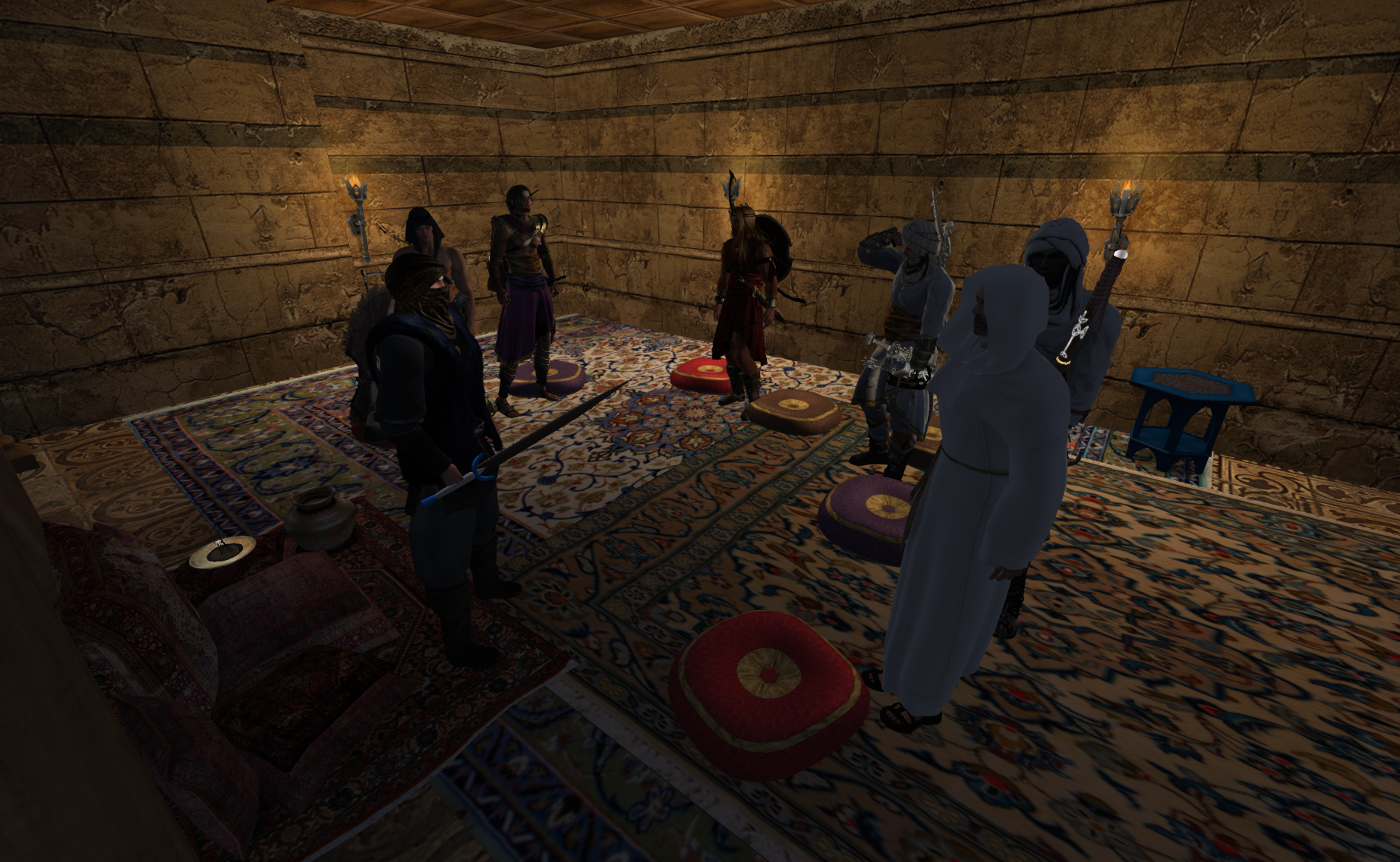
In a secret place in the oasis of Klima gathered the leaders of the Southern Trade Alliance, the warriors of the desert and the leaders of the caravan. A man some already knew was proclaimed the new Salt Ubar. The initiate held a small ceremony and gave his blessing.
[15:42] Melampus (godhet): And what does that have to do with Gor? Let me summarize:
[15:43] Melampus (godhet): The religious concepts behind a Catholic pilgrimage to the tomb of the Apostle James in Santiago de Compostela and to the Sardar Mountains, the seat of the priest-kings, could not be more different. In the first case, it is about reconciliation with God, for which the saint is invoked as an intercessor. In the case of the Sardar pilgrimage, it is about—in addition to a trade with the priest-kings—avoiding hubris through adherence to religious precepts
[15:44] Melampus (godhet): And yet: Penalty pilgrimages can be linked to the idea of overcoming hubris in the pilgrimage to the Sardar Mountains, just as they can to the idea of reconciliation in the Catholic pilgrimage. In both cases, it is about change, renewal, and conversion. And this is ultimately the goal that should be pursued when imposing penal pilgrimages.
[15:45] Melampus (godhet): I would therefore like to advocate that legal scholars consider this possibility in their jurisprudence. It is certainly more humane than impalement and offers more interesting possibilities for role-playing than other, conventional punishments.
[15:46] Melampus (godhet): We initiates can offer diverse assistance in such a role-playing scenario. The initiate in their hometown can issue a letter of authentication and bestow a blessing upon the pilgrim before their departure. Initiates in the towns along the way can welcome pilgrims, provide them with shelter and pastoral care. And the initiates at the pilgrimage site in the Sardar Mountains can receive the condemned, listen to their stories, and issue them a document certifying their arrival.
[15:48] Ferrace Memo: (=>en) The penal pilgrimage is a very good thing for purification. But how long does something like this last?
[15:51] Melampus (godhet): That’s a valid point, Lady. In modern times, starting in the 1980s, this practice was revived, for example by the youth organization OIKOTEN in Belgium. There, young offenders are sent on outings, but not alone; they are accompanied. I once encountered a group in real life. There was even a police officer with a weapon in his armpit holster.
[15:52] Hermes (prinzensaft): My worry: is there not the general status of pilgrims that might be of concern? For now I’d consider a pilgrim a pious person, but if this punishment becomes generalized, it will shed doubt on every pilgrim.
[15:55] Melampus (godhet): Well, Your Excellency Khan, everyone who goes on pilgrimage receives the status of a pilgrim. They temporarily belong to this class for the duration of their journey. In the past, there were rituals for this, such as the presentation of a pilgrim’s bag and staff by a priest, comparable to the insignia of a monk. Part of the concept of pilgrimage is also not to focus on the person and their past, but to accept them in their new status.
Serus, Initiate of Ianda (2017)
[15:57] Melampus (godhet) nods to Amina: “Yes, that’s actually the concept. That pilgrimage leads to change. I see it more realistically and believe that often not much will change, but probably a little, and it’s an opportunity for new ideas and perspectives.”
[16:00] Melampus (godhet) shakes his head at Khan’s remark: “Well, that would no longer be a pilgrimage, but an exile, albeit only temporary. But it could also go to places other than the Sardar Mountains, such as to the martyrs of the Temple of Kassau.”
[16:01] Hermes (prinzensaft): So if I understand you correctly, the destinations would have to be sacred places of sorts? What would figure as such? Any temple in a city?
[16:02] Melampus (godhet) nods: “That could be added, although I believe the daily rhythm of setting off, traveling, and arriving is already a task in itself. I wouldn’t burden the pilgrimage with too much else.”
[16:02] Hermes (prinzensaft): Yes, lady, that pilgrimage also requires to pass a certain number of places. And not forcibly holy ones.
[16:03] ℜadegund (radegundis): This addition to the meaning of the pilgrimage is so significant that there is probably only one appropriate course of action. Someone must travel personally to the Priest-Kings, humbly present the proposal, and then wait for a reply… however many hundreds of orbits around the celestial fire that may take.
[16:03] Hermes (prinzensaft): The final destination might be the Sardar, but why not add other places, as was the case for that Dutch guy.
[16:04] Melampus (godhet): The Sardar Mountains are naturally the main pilgrimage, if only because of the proximity to the priest-kings, an experience that can only be had here.
[16:08] Melampus (godhet): Certainly, this too has a spiritual dimension: a pilgrimage from temple to temple. While we don’t have relic worship on Gor, all the temples are the homes of the priest-kings. However, for the concept of overcoming hubris, the journey to the Sardar Mountains remains the ultimate goal.
[16:11] Melampus (godhet) bows slightly: “You are very welcome. I am glad that you enjoyed the class.”

The mysterious Sardar mountains and something eery…