


The Sardar Pilgrimage as a Legal Measure of Punishment
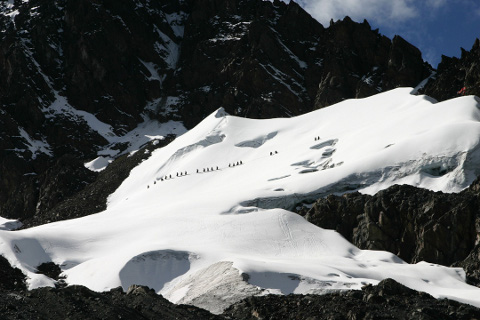
Pilgrimage to Sardar, taken from he Ianda Times vol. 1, issue 33 (2012)
The Sardar Pilgrimage as a Legal Measure of Punishment
Presentation at the En’Kara Fair [2026, edited] by Melampus (godhet), member of the white caste and Initiate of Isfahan
You are most welcome to my talk on “The Sardar Pilgrimage as a Legal Measure of Punishment.” My name is Melampus, and I have been an initiate at the Temple of Isfahan for three years, having previously studied with my revered teacher, Blessed One Tariq ibn Joshao, from the Oasis of Two Scimitars.
[15:02] Melampus (godhet): Today, here as we stand on this pilgrimage, before the majestic Sardar Mountains, I feel compelled to make a proposal. It is a proposal to include the pilgrimage to the Sardar Mountains as a means of punishment within the public legal system.
[15:03] Melampus (godhet): I am not only talking about pilgrimages as a punitive measure under the Initiate Law for religious offenses, but also about secular law, that is, about public law of cities as well as merchant law.

The gates of Sardar
[15:04] Melampus (godhet): For wherever we read about the Initiate Law in the books, we see that it is closely intertwined with secular legal systems. This is particularly evident in the fact that Goreans must undertake this journey before their 25th birthday. The following quote refers to Ute from the leatherworkers’ caste of Teletus:
[15:04] Melampus (godhet): “Besides, she knew well that, some year, prior to her twenty-fifth year, such a journey must be undertaken by her. The Merchants of Teletus, controlling the city, would demand it of her, fearing the effects of the possible displeasure of the Priest-Kings on their trade. If she did not undertake the journey then, she would be simply, prior to her twenty-fifth birthday, removed from the domain of their authority, placed alone outside their jurisdiction, beyond the protection of their soldiers. Such an exile, commonly for a Gorean, is equivalent to enslavement or death. For a girl as beautiful as Ute it would doubtless have meant prompt reduction to shameful bondage, chains and the collar. …”
Captive of Gor, Book 7, page 234
[15:05] Melampus (godhet): Had Ute not undertaken the pilgrimage before her 25th birthday, she would be subject to secular law and would have to face consequences as described in this quote. This means that the secular authorities, if not ensuring the pilgrimage itself, would at least impose legal repercussions if the journey was not undertaken within the prescribed time limit.
[15:06] Melampus (godhet): It is a religious precept. But the reason a city administration enforces it lies in the fear that the city might lose the favor of the priest-kings if it disobeys. The city’s welfare—or, in religious terms, its salvation—is at stake. The priest-kings might turn against the city if religious precepts are not followed.
[15:06] Melampus (godhet): Why is that?

Initiate Kai (malakai.corvinus) inaugurated the temple of the White Caste in Cartassa (2022).
[15:07] Melampus (godhet): The cities in the central region of the Gorean continent and the surrounding islands were famously created by John Norman based on the model of the polis in ancient Greece. It is therefore reasonable to assume that the religion of these cities, the belief in priest-kings, is also based on the religion of the Greek polis
[15:08] Melampus (godhet): And indeed, there are parallels that are already evident in the external circumstances. The priest-kings reside in a mountain range, the Sardar Mountains, and according to ancient Greek belief, the gods also dwell on a mountain massif, Mount Olympus, the highest mountain in Greece.
[15:08] Melampus (godhet): A central concept in ancient Greek religion is “hubris.” And that is what this is about: hubris. “Hubris” means arrogance and presumption. The reasons lie in overestimating oneself and in pride. Both are things that neither the gods of Greece nor the priest-kings can tolerate. Whoever overestimates himself and becomes arrogant lacks proper restraint; he owes both gods and priest-kings the respect they deserve. He becomes presumptuous and disregards the commands of the gods. And he ignores religious precepts.
[15:10] Melampus (godhet): If a community, a city, tolerates or even supports this, it is guilty of hubris. It will be punished by the gods just as arrogance itself is. The priest-kings withdraw their favor from the city, and the city becomes impoverished or desolate. The previously mentioned quote refers to the merchants who are explicitly concerned about trade in their city of Teletus.
[15:11] Melampus (godhet): But things could get even worse. If the inhabitants let their hubris go too far, they might face the destruction of their city by the blue flame. The consequences are devastating: A city that has lost the favor of the priest-kings is doomed.
[15:12] Melampus (godhet): The pilgrimage to the Sardar Mountains is therefore not only a supplication pilgrimage, in which offerings are made to the priest-kings on the platform by the palisades in exchange for a favor. Of course, this is also part of the pilgrimage to the Sardar Mountains.
[15:12] Melampus (godhet): An example of this is the Red Savage, which John Norman describes on that platform in Book 3, Priest Kings of Gor: The hunter gives the priest-kings a self-carved tabuk and in return wants the tabuk herds to not fail to appear that year.

Initiates of Herlit (2011)
[15:13] Melampus (godhet): This is the principle of “Do ut des,” as the Romans say. I give you something so that you give me what I want. This principle can also include the idea of restitution. The priest-kings are receiving back something that is rightfully theirs, but which I withheld from them through my hubris.
[15:14] Melampus (godhet): If I succumbed to hubris, I withheld something from the priest-kings. I thereby angered them. What could be more obvious to appease the priest-kings in their wrath than a pilgrimage to the Sardar Mountains? Here, too, the pilgrimage is, in a sense, a bargain with the priest-kings.
[15:15] Melampus (godhet): If the authorities enforce religious rites to ensure the prosperity of their city, then I believe it is reasonable to consider using religious precepts as a legal remedy beyond this. This could even include a sentence of pilgrimage, even for a criminal offense.
[15:16] Melampus (godhet): I would like to illustrate this with a case study that does not come from John Norman’s books, but from Earth:
[15:16] Melampus (godhet): In the city of Leuven in the Duchy of Brabant (present-day Belgium), in 1418, the citizen Janne Vliege int Sant stood before a jury. He was accused of acts of violence, mistreatment, and rape. The jury sentenced him to three pilgrimages to Cyprus, Santiago de Compostela, and Rocamadour, and precisely stipulated the itinerary for each.
[15:17] Melampus (godhet): Janne Vliege has to leave for Cyprus within three months. That means he has to travel from Leuven, a neighboring city of Brussels, to a Mediterranean port in order to sail from there to Cyprus.
[15:19] Melampus (godhet): Once he returns from Cyprus, he has to set off for Santiago de Compostela within six weeks. Santiago is located in the far northwest of Spain. Janne Vliege therefore has a long and arduous hike ahead of him, crossing the Pyrenees and the mountains of northern Spain.

An Initiate, Se’Kara Fair (2024)
[15:20] Melampus (godhet): Once he returns from Santiago, he must set off for Rocamadour within another six weeks. Rocamadour lies precisely in the center of France. This means that on his pilgrimage to Santiago, he could have planned his route to pass by it. But no, the jury ordered him to return home first before embarking on his third pilgrimage.
[15:21] Melampus (godhet): Janne Vliege had to bring a certificate from each pilgrimage site, in which a priest confirmed to the lay judges that the convicted man had been there and had fulfilled the religious requirements with the necessary devotion. In his case, we don’t know if this happened, because the certificates can no longer be found in the archives.
[15:22] Melampus (godhet) ad Radegundam vertit: “Unum tale dictum adhuc, filia mea, et lingua originali initiatorum loqui pergam.”
[15:23] Melampus (godhet): But sentencing people to punitive pilgrimages was common practice. Thousands of such sentences have survived from the period between the 14th and 17th centuries, and occasionally even into the end of the 18th century. We find them primarily in the cities of the Netherlands, including present-day Belgium, and in southern France, where the Inquisition in Toulouse was also very active.
[15:24] Melampus (godhet): The criminal cases that resulted in sentences of punitive pilgrimages were diverse. They can be assigned to several categories.
[15:25] Melampus (godhet): Religious offenses: These include blasphemy and heresy.
[15:26] Melampus (godhet): Official misconduct: Corruption and misconduct by municipal and princely officials. But also insulting or using violence against officials, for example, slapping a magistrate.
And also official misconduct committed by both groups: perjury, forgery, violation of police regulations, filing false complaints.
[15:27] Melampus (godhet): Commercial offenses: Use of false measures and weights, violation of regulations governing trade and business activities
[15:27] Melampus (godhet): Sexual offenses: Rape, sodomy, laziness, adultery
[15:29] Melampus (godhet): Offenses against persons:
Breach of the peace, manslaughter, threats, provocations, assault, inflicting injuries, attacks on someone’s home, insult
[15:30] Melampus (godhet): Property crimes: Theft, robbery and poaching

A member of the White Caste, En’Kara Fair (2024)
[15:32] Melampus (godhet): However diverse these offenses may be, in Dutch cities, the punishment in one-third of all documented cases across all categories was a pilgrimage to Santiago de Compostela. This is a walk of approximately 5,000 kilometers: 2,500 kilometers there and 2,500 kilometers back. If a person committed multiple offenses, the lay judges often imposed several pilgrimages.
[15:33] Melampus (godhet): In serious cases, the pilgrimages had to be undertaken one after the other. Often, the lay judges were lenient, and the requirement to visit several places could be fulfilled with a single trip.
[15:33] Melampus (godhet): It is important to note that even in late medieval European criminal law, a distinction was made between manslaughter and murder. In cases of manslaughter, a punitive pilgrimage could be imposed, but not in cases of murder. Murder was considered too serious to warrant a pilgrimage.
[15:34] Melampus (godhet): Why were criminals sentenced to pilgrimages?
[15:34] Charlotte Windsor: So we, Goreans, vs. earthlings, are the blessed ones to only need to go to the Sardar for the piligrimage before we are twenty-five. Receiving pardon from such crimes, and appeasing the Priest Kings.

An initiate during a mysterious ritual (Herlit 2011)
[15:35] Charlotte Windsor: So the city will be cleansed of his crimes?
[15:35] Charlotte Windsor: a sacrifice for the Priest Kings.
[15:36] Melampus (godhet): Yes, you afre right, Lady. Both is correct.
[15:36] Melampus (godhet): There are a whole host of reasons, ranging from legal history to psychology. I’d like to mention the four most important ones:
[15:37] Melampus (godhet): Religious reasons. A crime is not only an offense against fellow human beings and society, but also a sin against God. A pilgrimage can offer atonement for an offense committed against God and against the divinely ordained order.
[15:37] Melampus (godhet): Legal reasons: A pilgrimage was not something pleasant as we imagine it today. It was strenuous, arduous, and fraught with danger. Being sent on a pilgrimage was a real punishment. The more serious the offense, the farther away the pilgrimage site. For lesser offenses, pilgrimages to closer destinations could be ordered; from the Netherlands, for example, to Aachen, Cologne, or Trier. This was then a lesser punishment because it was less far, less strenuous, and less dangerous.
[15:38] Melampus (godhet): Social reasons: Let’s take the example of Janne Vliege from Leuven, who must have been a real scoundrel. He needed at least a year and a half for his three pilgrimages to Cyprus, Santiago de Compostela, and Rocamadour. That means he was gone for a year and a half. People had a year and a half of peace from him, perhaps even two years. And perhaps he never came back at all. The imposition of punitive pilgrimages thus had a social and hygienic significance.
[15:39] Melampus (godhet): Psychological reasons: People change when they travel. Travel always has a performative character. This is even more pronounced in pilgrimages than in secular travel, because the idea of conversion and new beginnings plays an even greater role.
[15:40] Melampus (godhet): I once attempted a definition of pilgrimage: “Pilgrimage is a spiritually imbued and purposeful walking that prompts a rethinking of one’s own orientation and ultimately leads to personal change.”
[15:40] Melampus (godhet): Behind the pilgrimage lies the hope that the individual will be transformed, that they will become someone else. This is part of the very essence of a pilgrimage, regardless of the religion or destination. It may sound naive to hope, especially in the case of offenders and criminals, that this transformation will occur and last, but it is the very essence of it..
[15:41] Melampus (godhet): At least one positive effect occurs. The English scholar Thomas More once said: “There has never been a pilgrim who has returned home without having shed a prejudice and gained a new thought.”

In a secret place in the oasis of Klima gathered the leaders of the Southern Trade Alliance, the warriors of the desert and the leaders of the caravan. A man some already knew was proclaimed the new Salt Ubar. The initiate held a small ceremony and gave his blessing.
[15:42] Melampus (godhet): And what does that have to do with Gor? Let me summarize:
[15:43] Melampus (godhet): The religious concepts behind a Catholic pilgrimage to the tomb of the Apostle James in Santiago de Compostela and to the Sardar Mountains, the seat of the priest-kings, could not be more different. In the first case, it is about reconciliation with God, for which the saint is invoked as an intercessor. In the case of the Sardar pilgrimage, it is about—in addition to a trade with the priest-kings—avoiding hubris through adherence to religious precepts
[15:44] Melampus (godhet): And yet: Penalty pilgrimages can be linked to the idea of overcoming hubris in the pilgrimage to the Sardar Mountains, just as they can to the idea of reconciliation in the Catholic pilgrimage. In both cases, it is about change, renewal, and conversion. And this is ultimately the goal that should be pursued when imposing penal pilgrimages.
[15:45] Melampus (godhet): I would therefore like to advocate that legal scholars consider this possibility in their jurisprudence. It is certainly more humane than impalement and offers more interesting possibilities for role-playing than other, conventional punishments.
[15:46] Melampus (godhet): We initiates can offer diverse assistance in such a role-playing scenario. The initiate in their hometown can issue a letter of authentication and bestow a blessing upon the pilgrim before their departure. Initiates in the towns along the way can welcome pilgrims, provide them with shelter and pastoral care. And the initiates at the pilgrimage site in the Sardar Mountains can receive the condemned, listen to their stories, and issue them a document certifying their arrival.
[15:48] Ferrace Memo: (=>en) The penal pilgrimage is a very good thing for purification. But how long does something like this last?
[15:51] Melampus (godhet): That’s a valid point, Lady. In modern times, starting in the 1980s, this practice was revived, for example by the youth organization OIKOTEN in Belgium. There, young offenders are sent on outings, but not alone; they are accompanied. I once encountered a group in real life. There was even a police officer with a weapon in his armpit holster.
[15:52] Hermes (prinzensaft): My worry: is there not the general status of pilgrims that might be of concern? For now I’d consider a pilgrim a pious person, but if this punishment becomes generalized, it will shed doubt on every pilgrim.
[15:55] Melampus (godhet): Well, Your Excellency Khan, everyone who goes on pilgrimage receives the status of a pilgrim. They temporarily belong to this class for the duration of their journey. In the past, there were rituals for this, such as the presentation of a pilgrim’s bag and staff by a priest, comparable to the insignia of a monk. Part of the concept of pilgrimage is also not to focus on the person and their past, but to accept them in their new status.

Serus, Initiate of Ianda (2017)
[15:57] Melampus (godhet) nods to Amina: “Yes, that’s actually the concept. That pilgrimage leads to change. I see it more realistically and believe that often not much will change, but probably a little, and it’s an opportunity for new ideas and perspectives.”
[16:00] Melampus (godhet) shakes his head at Khan’s remark: “Well, that would no longer be a pilgrimage, but an exile, albeit only temporary. But it could also go to places other than the Sardar Mountains, such as to the martyrs of the Temple of Kassau.”
[16:01] Hermes (prinzensaft): So if I understand you correctly, the destinations would have to be sacred places of sorts? What would figure as such? Any temple in a city?
[16:02] Melampus (godhet) nods: “That could be added, although I believe the daily rhythm of setting off, traveling, and arriving is already a task in itself. I wouldn’t burden the pilgrimage with too much else.”
[16:02] Hermes (prinzensaft): Yes, lady, that pilgrimage also requires to pass a certain number of places. And not forcibly holy ones.
[16:03] ℜadegund (radegundis): This addition to the meaning of the pilgrimage is so significant that there is probably only one appropriate course of action. Someone must travel personally to the Priest-Kings, humbly present the proposal, and then wait for a reply… however many hundreds of orbits around the celestial fire that may take.
[16:03] Hermes (prinzensaft): The final destination might be the Sardar, but why not add other places, as was the case for that Dutch guy.
[16:04] Melampus (godhet): The Sardar Mountains are naturally the main pilgrimage, if only because of the proximity to the priest-kings, an experience that can only be had here.
[16:08] Melampus (godhet): Certainly, this too has a spiritual dimension: a pilgrimage from temple to temple. While we don’t have relic worship on Gor, all the temples are the homes of the priest-kings. However, for the concept of overcoming hubris, the journey to the Sardar Mountains remains the ultimate goal.
[16:11] Melampus (godhet) bows slightly: “You are very welcome. I am glad that you enjoyed the class.”

The mysterious Sardar mountains and something eery…
Leave a Reply
You must be logged in to post a comment.